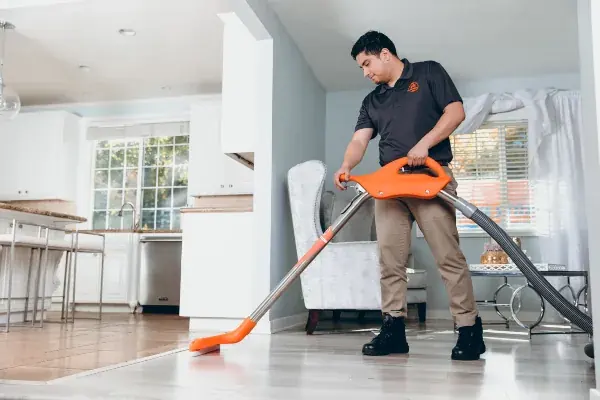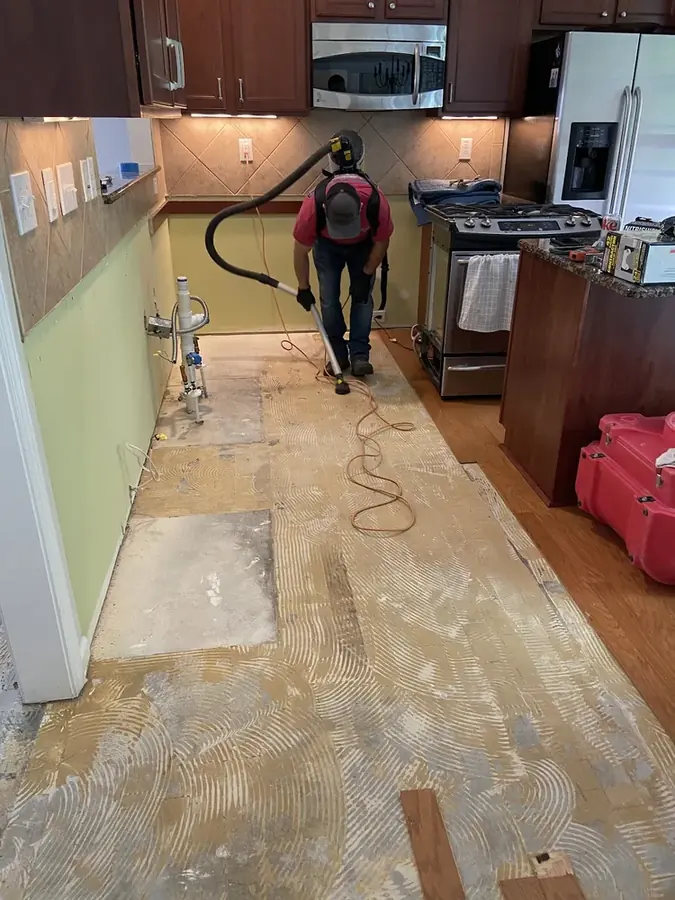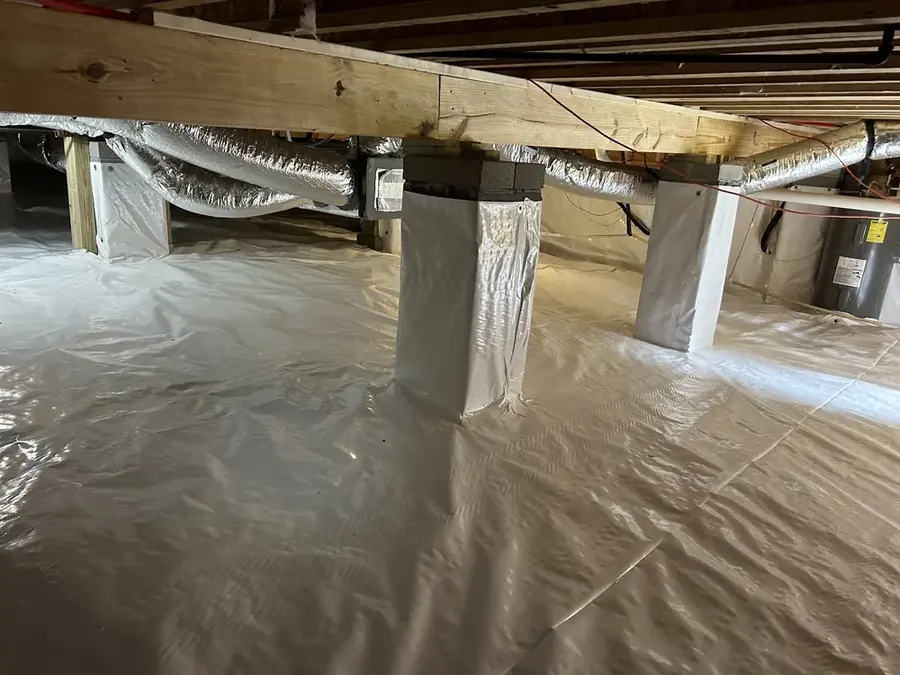
Getting the standing water out is only half the job. What actually saves a home after a water loss is drying the structure, the framing, the subfloor, the drywall, and the slab, down to a verified dry reading before anything is closed back up. In Georgia's humidity, a house that looks dry on the surface is very often still wet inside the walls and under the floors, and that trapped moisture is what warps wood, ruins drywall, and starts a musty smell.
Why drying is the step that matters
- Surface water evaporates, but water trapped in cavities and slabs does not on its own
- High indoor humidity slows natural drying to a crawl here
- Damp materials warp, swell, and smell within a day or two if not dried
- Only a moisture meter, not your eyes, can confirm the structure is truly dry
This is the step that follows every extraction job, whether the water came from a pipe, a storm, or a slab leak under the home.
The drying process
- Map the moisture through walls, floors, and cavities with meters and thermal imaging
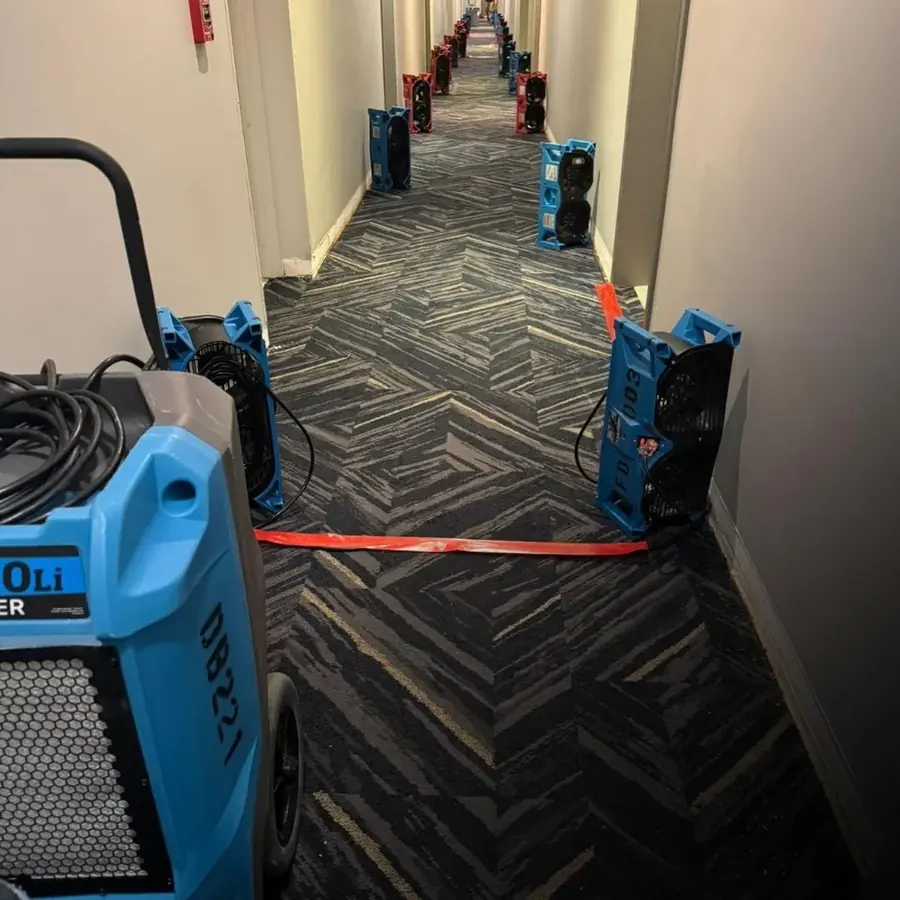
- Set air movers to move air across wet surfaces
- Run low grain refrigerant dehumidifiers to pull moisture out of the air
- Take daily readings and adjust the equipment as the structure dries
- Confirm a verified dry standard before pulling the equipment
Water damage that needs drying done right? Get a Smyrna crew and real drying equipment on it now.
Call (678) 679-460824/7 Smyrna dispatch